


Updated September 2026
Installing a sewer cleanout costs $650 to $3,500 in 2026, with most homeowners paying around $2,700 for the common two-way cleanout. Price depends on the type of cleanout, how deep the sewer line sits, and whether the crew has to cut through concrete or landscaping to reach it.
A cleanout is one of those parts of a house nobody thinks about until a sewer line backs up — and then it is the difference between a straightforward service call and an expensive, invasive one. This guide covers what a cleanout is, what installation costs in 2026, and how to find the one you may already have.
What Is a Sewer Cleanout?
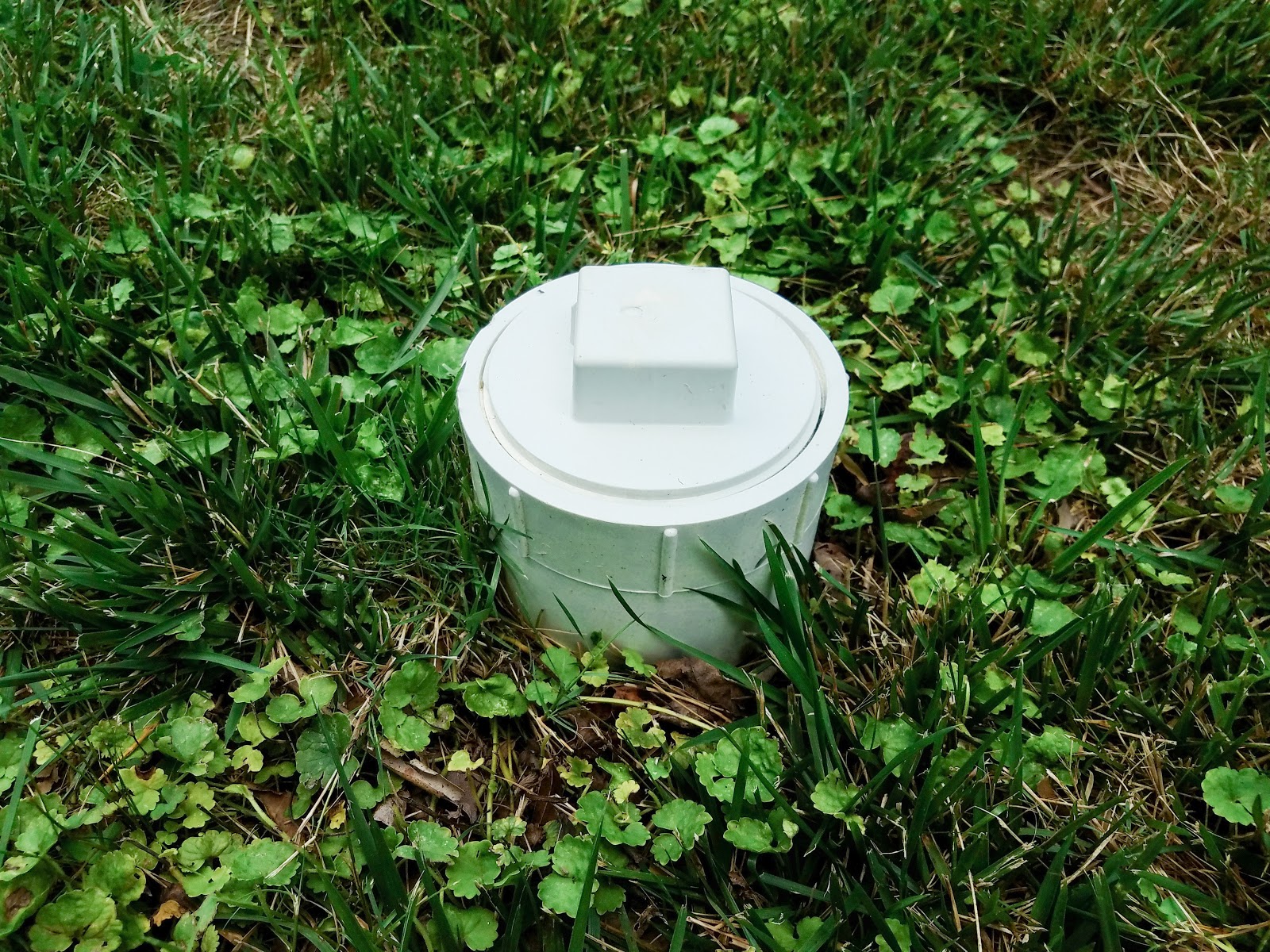
A sewer cleanout is a capped pipe that gives a plumber direct access to your main sewer line without digging. It is usually 3 to 6 inches in diameter, sits near the foundation or the property line, and is topped with a threaded plastic or metal cap. Behind that cap is your lateral sewer line — the pipe carrying wastewater from your house to the municipal sewer main or septic tank.
Without a cleanout, a plumber has to reach your main line some other way: pulling a toilet, going through a roof vent, or removing a fixture trap. All of those take longer, cost more, and put more of your house in the path of the work. With a cleanout, a technician removes one cap and puts a camera or a jetter straight into the line.
Homes built before the mid-1980s with their original plumbing often do not have one. If that describes your property, adding a cleanout is one of the few plumbing upgrades that pays for itself the first time something goes wrong.
Why Your Home Needs One
- Faster diagnosis. A sewer camera inspection through a cleanout takes minutes; without one, the camera has to be fed through a fixture or a vent.
- Cheaper clog clearing. Hydro jetting and cabling both cost less when the line is easy to reach.
- Less mess. Backups get pushed out through the cleanout instead of up through a shower drain or a floor drain.
- Better resale position. Buyers’ inspectors look for one, and a missing cleanout is a common negotiation point.
Sewer Cleanout Installation
There are three types of cleanouts, and the first step in the installation process is figuring out which one you need.
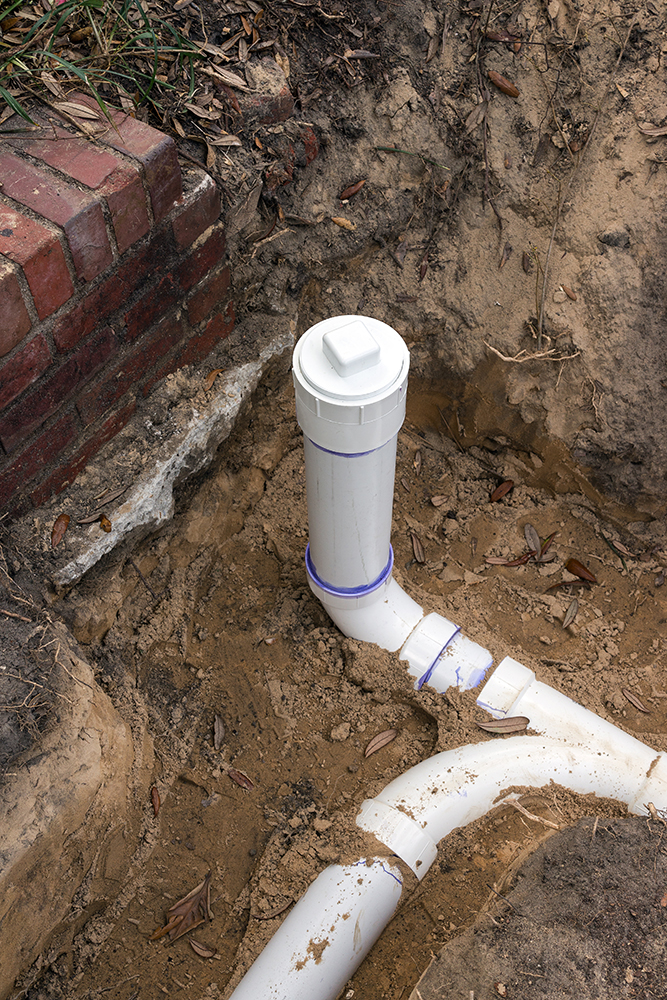
Double Cleanout. A double cleanout, is the most common type used. This is two individual pipes, installed next to each other with the 45 degree angle connection. These connections face each other giving you access to both sides of the sewer line, the city line and your home.
Test Tee. A test tee is a single pipe connecting straight down to your sewer line at a 90 degree angle. Because of this sharp angle it can be tricky to maneuver a drain snake or water jetter into the sewer line. These are often used as wall cleanout.
Once you have established which type of cleanout you will be installing, it’s time to pinpoint the exact location of your sewer line. There are a few ways to do so. You can contact the city and have them take a look at the infrastructure map or look for clues such as markings on the sidewalk but the best and most efficient method is to hire a professional plumber that will have the necessary equipment to flag the exact location of your sewer line.
Once the exact location of the sewer line is flagged along your property, it’s time to excavate the portion of the sewer line where the cleanout will be installed. A professional plumber will not only be able to locate your sewer line, but also advise you on the exact location where a cleanout should be installed and dig up the line without damaging it.
Once the sewer line is exposed, the next step is to measure out the portion of the sewer line that needs to be cut out, in order to install the cleanout. It’s important to get a good fit and test it to verify that it’s waterproof and leak free before filling in your hole and capping the cleanout.
Sewer Cleanout Installation Cost
Sewer cleanout installation costs $650 to $3,500 in 2026 for most residential jobs, with a national average near $2,700 for a two-way cleanout. Complex installations — deep lines, long runs, or access under a driveway — can run $5,000 or more. The single biggest cost driver is not the fitting itself, which is inexpensive; it is the excavation required to reach the line.
2026 Cost by Cleanout Type
| Cleanout type | Typical installed cost | When it makes sense |
|---|---|---|
| Single / one-way | $650 – $2,500 | Budget installs, tight access, shallow line |
| Double / two-way | $1,400 – $3,500 (avg. ~$2,700) | Most homes — access in both directions |
| Test tee (wall cleanout) | $200 – $800 | Interior or wall access, secondary point |
| Cleanout cap replacement only | $75 – $250 | Existing cleanout, damaged or missing cap |
What Drives the Price
| Cost factor | Typical range | Notes |
|---|---|---|
| Excavation | $50 – $250 per linear foot | Depth, soil, and distance to the line |
| Permit | $30 – $500 | Varies by jurisdiction; usually pulled by the plumber |
| Plumber labor | $45 – $200 per hour | Regional rates |
| Camera inspection / line locating | $100 – $400 | Often bundled into the installation |
Deep lines, long runs from the house to the main, and anything under pavement push toward the high end. Shallow lines close to the foundation in an open yard land at the low end.
Is a Cleanout Worth the Cost?
Yes, in most cases, and the math is not complicated. Clearing a main line clog without a cleanout costs more every single time, because the technician has to pull a fixture or work through a roof vent to reach the pipe. Camera inspections cost more for the same reason. Two or three service calls over the life of a house typically covers the installation.
Some municipal sanitary districts also offer rebates toward installing a cleanout, since an accessible lateral makes their job easier too. It is worth a call to your local district before you schedule the work.
Can You Install a Cleanout Yourself?
The parts are cheap — roughly $80 to $230 for pipe and fittings, plus tool costs if you don’t own a pipe cutter. Renting excavating equipment runs a few hundred dollars a day.
The risk is what makes DIY a bad trade here. Cutting into a live sewer lateral without knowing its exact depth and path is how homeowners crack a pipe they were trying to improve access to, and a damaged lateral turns a $2,000 project into a sewer line repair. Most jurisdictions also require a permit and an inspection for work on the lateral. If you’re weighing it, our team handles sewer cleanout installation start to finish, including locating the line and pulling the permit.
Where Is My Sewer Cleanout Located?
Your sewer cleanout is most often outside, within 12 to 18 inches of the foundation, on the side of the house nearest a bathroom — a capped pipe 3 to 4 inches across, sitting flush with the ground or standing a few inches above it. In colder climates and in some slab-foundation homes, the cleanout is indoors instead, in a garage, utility room, basement, or crawl space.
How to Find an Outdoor Cleanout
- Walk the perimeter of the house, staying close to the foundation. Look for a round plastic or metal cap, often white or black, with a square nub in the center.
- Focus on the side of the house closest to a bathroom or the kitchen — the cleanout usually sits where the main drain exits.
- Check between the house and the street, and near the property line. Some homes have a second cleanout there.
- Push aside grass, mulch, and shrubs. Cleanouts get buried by landscaping over the years, and some sit inside a small ground box with a lid.
- If you know where your sewer line meets the main, walk a straight line from there back toward the house — the cleanout sits on that path.
How to Find an Indoor Cleanout
Look in the garage, basement, crawl space, or utility room, usually near a floor drain or close to where the main drain pipe passes through the foundation wall. Follow the drain lines from your fixtures to the point where they converge; the cleanout is a vertical or slightly angled pipe with a threaded cap at that junction.
What If You Can’t Find One?
Two possibilities: it exists and is buried, or the house never had one. A plumber with a line locator can settle it in a single visit by tracing the lateral and marking the path. If it turns out no cleanout was ever installed, that visit doubles as the site survey for putting one in.
Frequently Asked Questions
Sewer cleanout installation costs $650 to $3,500 in 2026, with a national average near $2,700 for a two-way cleanout. One-way cleanouts start lower, around $650 to $2,500. Deep lines, long runs, and excavation through concrete or landscaping push the total toward the high end.
A sewer cleanout is a capped pipe, typically 3 to 6 inches in diameter, that gives a plumber direct access to your main sewer line. It connects to the lateral line running from your house to the municipal sewer or septic tank, so clogs can be cleared and cameras run without pulling a toilet or digging.
Most outdoor cleanouts sit within 12 to 18 inches of the foundation, on the side of the house closest to a bathroom, or between the house and the street near the property line. Indoor cleanouts are usually in a garage, basement, crawl space, or utility room near a floor drain.
Walk the foundation line looking for a capped pipe hidden under grass, mulch, or shrubs, and check for small ground boxes with removable lids. If that fails, a plumber can trace the lateral with a line locator and mark the exact position — usually in one visit.
A one-way cleanout is a single pipe tied in at a 45-degree angle, giving access in one direction only. A two-way cleanout uses two pipes facing opposite directions, so a technician can work back toward the house or out toward the city main from the same access point. Two-way is the more common installation.
If your home was built before the mid-1980s and still has original plumbing, it may not have one, and adding it is worth considering. Without a cleanout, every future clog, camera inspection, and jetting job costs more and takes longer because the technician has to reach the line through a fixture or a roof vent.
Usually yes. Work on the sewer lateral is permitted in most jurisdictions, with plumbing permits generally running $30 to $500 depending on where you live. A licensed plumber pulls the permit and schedules the inspection as part of the job.
In most jurisdictions the homeowner owns and maintains the lateral line and the cleanout on their property, while the municipality owns the sewer main in the street. Where exactly that responsibility splits varies by city, so confirm with your local sewer or sanitary district.
Most straightforward installations are completed in a single day. Jobs involving deep lines, long excavation runs, or concrete removal and patching can extend into a second day, with the patching cure time adding to the timeline.
Need a sewer cleanout installed — or can’t find the one you have?
VIP Sewer & Drain Services is a family-owned, licensed drain and sewer specialist with 25+ years of experience. Our technicians locate your lateral line, install the right cleanout for your property, and handle the permit and inspection. We offer 24/7 availability and free estimates.
24/7 EMERGENCY LINE
Plumbing Emergency? Call Now!
You don’t have to figure out whether it’s bad enough to call.
Tell us what’s happening and we’ll tell you — and if it needs someone tonight, we’ll book it before you hang up.