


If you’re dealing with recurring backups, slow drains that never fully clear, or mysterious sewer odors, you’ve probably heard the recommendation: “You need a sewer camera inspection.”
But if you’ve already had one, and the problem came back, you may be wondering: Do sewer cameras really tell the whole story?
At VIP Sewer and Drain Services, we believe in being honest about what technology can and cannot do. A sewer camera inspection is one of the most valuable diagnostic tools available but it’s only one piece of a larger system. The goal isn’t just to look inside your pipe. The goal is to understand how your system behaves over time.
Let’s break down what a sewer camera inspection actually reveals and what it can’t see.
What a Sewer Camera Inspection Actually Does
A sewer camera inspection involves inserting a high-resolution, waterproof camera into your drain or sewer line. The camera transmits live video to a monitor, allowing technicians to visually examine the interior of the pipe.
What it shows:
- Pipe material and condition
- Cracks or fractures
- Tree root intrusion
- Offsets or misaligned joints
- Heavy buildup or blockages
- Collapsed or broken sections
What it doesn’t automatically show:
- Why the problem keeps happening
- How the pipe performs under real usage conditions
- Intermittent flow restrictions
This is where misunderstandings happen. A camera shows conditions, the physical state of the pipe at that moment. It does not always reveal the root cause of recurring issues.
That distinction matters.
What Sewer Cameras Are Excellent at Detecting
When used correctly, a sewer camera inspection is extremely effective at identifying structural problems and visible obstructions.
1. Tree Root Intrusion
Roots are one of the most common causes of recurring sewer issues. Even small hairline cracks can allow roots to enter and expand inside the pipe. A camera clearly shows the location and severity of root growth.
2. Pipe Cracks and Breaks
Shifts in soil, aging materials, and ground movement can crack or fracture pipes. Cameras help pinpoint exact damage locations — critical for targeted repairs.
3. Collapsed or Severely Damaged Lines
If a pipe has collapsed, separated, or is heavily corroded, a camera makes it immediately visible.
4. Grease and Debris Buildup
Recurring kitchen backups often stem from grease accumulation that narrows the pipe diameter. Cameras can reveal the extent of buildup.
5. Foreign Objects
Toys, wipes, sanitary products, and construction debris are frequently found during inspections.
In short, if something physical is blocking or damaging the pipe, a sewer camera inspection is an incredibly powerful diagnostic tool.
But structure isn’t the whole story.
What Sewer Cameras Cannot Reliably See
Here’s where many companies oversell camera technology. A sewer camera inspection shows structure, not flow behavior. That’s an important difference.
Intermittent Problems. If your drains back up only during heavy rain or when multiple fixtures are running, the camera may show a clear pipe during inspection. That doesn’t mean the system performs properly under stress.
Partial Flow Restrictions. A pipe can look “mostly clear” but still restrict flow enough to cause slow drainage or periodic backups.
Hydraulic Issues. Improper pipe slope (also called “belly” or sag) can hold water and waste even if the pipe walls appear intact. While a camera may detect standing water, it doesn’t measure hydraulic performance precisely.
Pressure and Venting Problems. Drainage systems rely on proper venting and air balance. A camera cannot diagnose airflow or pressure imbalance within the plumbing system.
Early-Stage Deterioration. Minor scaling or internal roughness may not look severe but can significantly impact flow over time.
A camera provides visual evidence, but it doesn’t simulate real-life usage.
Why a “Clear Camera” Doesn’t Always Mean a Healthy Pipe
One of the most frustrating situations for homeowners is hearing “Your line looks clear.”
Yet the backup keeps happening. This disconnect can occur if the clog was temporarily cleared before the inspection. The problem could only appear during peak usage or there could be a slight sag holding waste between uses. The issue could also be upstream or downstream from where the camera reached.
Whatever the case, a clean-looking pipe is not automatically a well-functioning pipe. This is why experience matters. An honest company doesn’t stop at “It looks fine.” They interpret what they see and what they don’t see.
Sewer Cameras vs. Other Diagnostic Tools
A sewer camera inspection should not be treated as a standalone solution. It works best as part of a broader diagnostic approach.
Other tools and methods may include:
- Drain flow testing under load
- Hydro jetting to remove buildup before inspection
- Locating equipment to identify pipe depth and exact repair points
- Smoke testing for vent or leak detection
- Dye testing for intermittent backup patterns
The right approach depends on symptoms. Companies that rely solely on camera footage may miss behavioral issues that require additional testing. On the other hand, companies that skip the camera entirely risk guessing.
At VIP Sewer and Drain Services, we don’t guess and we don’t oversimplify.
When a Sewer Camera Inspection Is the Right First Step
A sewer camera inspection is typically the right starting point when you have recurring drain backups, you’re buying or selling a home or there are multiple slow drains at once.
If your property has a history of root intrusion or you have had repeated clogs in the same area, then a sewer camera inspection will provide valuable insight. A camera inspection is also helpful in providing confirmation before major repair work begins.
For skeptical home and business owners, especially those who’ve had previous inspections, a properly performed camera inspection can provide clarity.
But the key word is properly.
The VIP Approach: Using Sewer Cameras the Right Way
At VIP Sewer and Drain Services, our philosophy is simple: We use sewer cameras to confirm, not to guess.
That means we clear heavy debris before inspecting so the view is meaningful. We evaluate pipe slope and flow patterns, not just visible cracks. We explain what we see in plain language and we differentiate between cosmetic issues and structural failure. Once we obtain solid evidence, we make repair recommendations.
Our goal isn’t to sell excavation or replacement if it isn’t necessary. It’s to understand how your system behaves over time. Because the real question isn’t just “Does the pipe look okay today?” It’s “Will this system continue to function reliably under real-world conditions?”
That’s the difference between a camera operator and a diagnostic expert. Seeing the Pipe Is Step One. Understanding It Is Step Two. A sewer camera inspection is one of the most valuable diagnostic tools in modern plumbing. It provides clarity, documentation, and precise location data. But it is not magic. It doesn’t predict future failure on its own. It doesn’t measure flow dynamics. It doesn’t automatically explain recurring issues without interpretation.
When you’re comparing companies, ask:
Do they use cameras as part of a system?
Do they explain findings clearly?
Do they test performance, not just structure?
Do they recommend repairs based on evidence?
At VIP Sewer and Drain Services, we combine technology with experience. We believe homeowners deserve clear answers, not assumptions. If you’re dealing with unexplained drain problems or you want a second opinion done the right way, we’re here to help.
Schedule a Sewer Camera Inspection
Recurring backups are frustrating — but guessing is worse.
Let VIP Sewer and Drain Services provide a thorough, diagnostic-first sewer camera inspection that looks beyond the surface and focuses on long-term performance.
Schedule a Sewer Camera Inspection today and get answers you can trust.
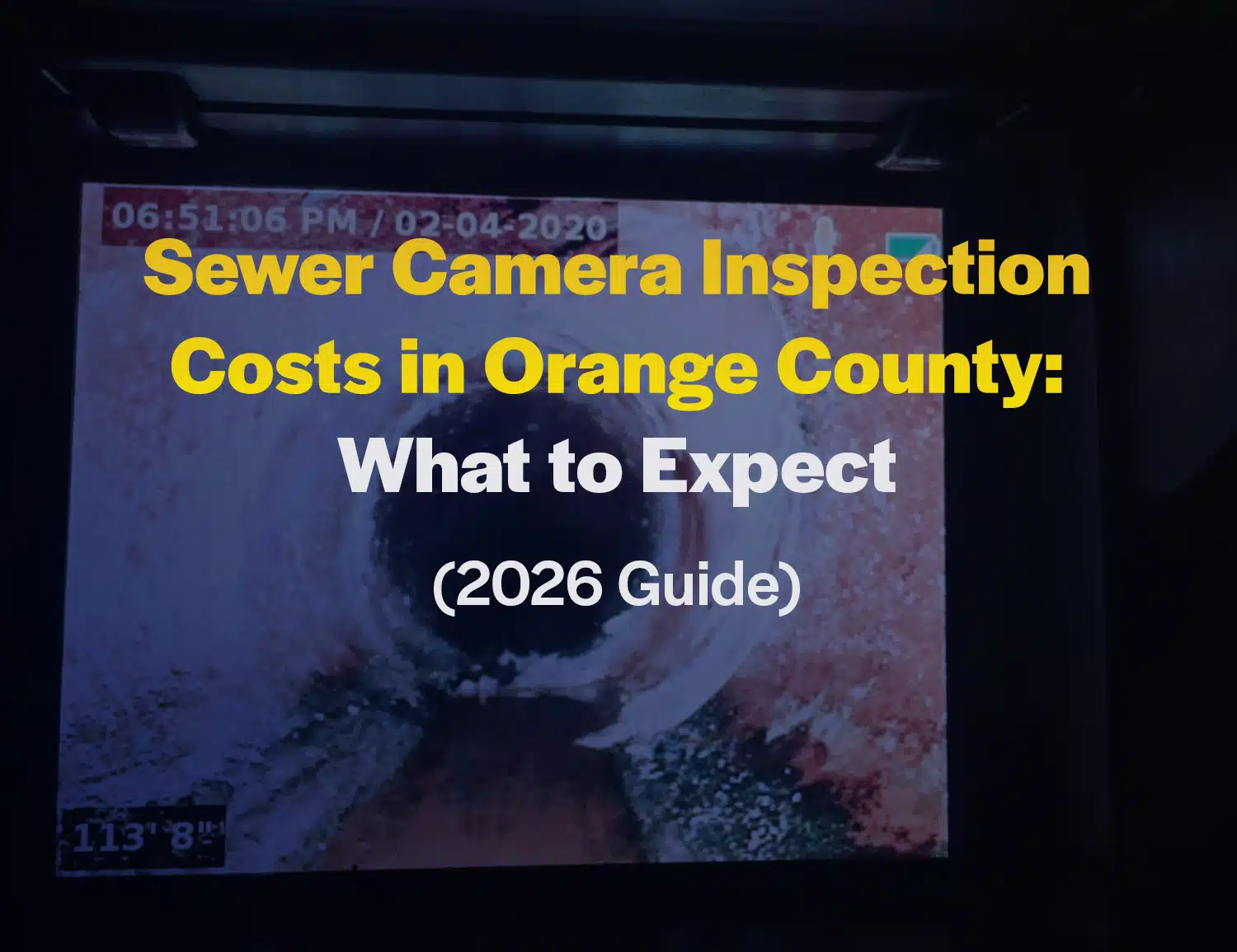
Sewer Camera Inspection Costs in Orange County: What to Expect (2026 Guide)
How much does a sewer camera inspection cost in Orange County? Learn typical pricing, what affects cost, and when an inspection is worth it.

How Much Does Hydro-Jetting Cost in Orange County? (2026 Guide)
Wondering how much hydro jetting costs in Orange County? This 2026 guide breaks down real pricing, what affects cost, and when it’s the best solution for stubborn clogs and sewer line buildup.

Why Shared Sewer Lines & Risers Clog — And How HOAs Can Prevent It
Shared sewer lines and vertical risers in condos and multi-unit buildings are highly vulnerable to clogs. When multiple households share the same plumbing system, grease buildup, wipes, scale, and pipe deterioration combine to create serious blockages that affect entire stacks — not just one unit.
In this guide, we explain why shared sewer lines clog, how risers become restricted over time, and what HOAs can do to prevent emergency backups through proactive maintenance and hydro jetting.