


Orange County
Leak Detection & Slab Leak Repair
A hidden leak rarely announces itself. It shows up as a water bill that doesn’t add up, a warm patch on the floor, or a damp spot on a wall with no fixture behind it. VIP Sewer & Drain Services locates water, slab, and sewer line leaks across Orange County using non-invasive equipment — so we know exactly where the problem is before anything gets opened up.
Same-Day Service
25+ Years Experience
Free Estimates
What Leak Detection Actually Is
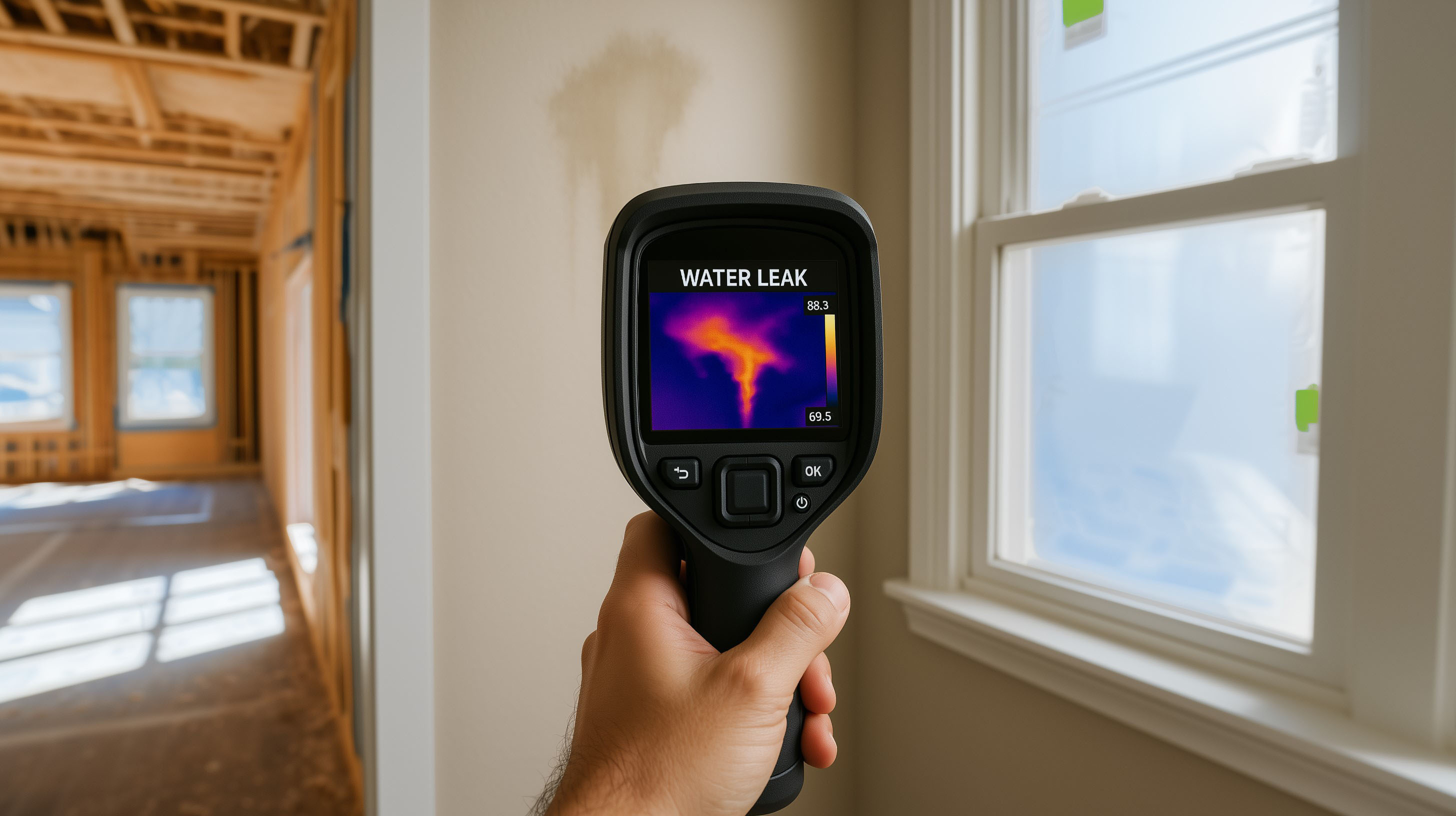
Leak detection is the process of pinpointing where water is escaping a pipe without excavating to find it. Instead of opening walls or breaking concrete to look, we use acoustic, thermal, and pressure equipment to narrow the leak to a specific spot — then open only that spot.
The distinction matters because the cost of a leak is mostly the cost of finding it badly. A guessed location means cut drywall, broken tile, and patched concrete in the wrong place, then the same again somewhere else. An accurate location means one small, planned opening.
We locate leaks in pressurized supply lines, hot and cold water lines under a slab, drain and sewer lines, irrigation lines, and pipes running inside walls and ceilings.
Signs You Have a Hidden Water Leak
Most homeowners call us after noticing one of these:
A water bill that jumped with no change in use. The most common first sign, and the most reliable.
The sound of running water when every fixture is off. Usually a pressurized line.
A warm or hot spot on the floor. Almost always a hot water line under the slab.
Damp, warped, or discolored flooring — tile that lifts, wood that cups, carpet that stays damp in one area.
Stains or sagging on walls or ceilings, or paint and wallpaper that blisters.
A musty smell that stays in one room, or visible mold and mildew.
Water pressure that has dropped across the house for no clear reason.
New or widening cracks in flooring, walls, or the foundation.
A quick check you can do before calling: shut off every fixture, appliance, ice maker, and irrigation zone, then look at the water meter. If the dial is still moving, water is going somewhere it shouldn’t.
If you suspect a leak, don’t wait. Water that runs under a slab or behind a wall for weeks costs far more to repair than the leak itself ever would.
Slab Leak Detection & Repair
A slab leak is a leak in a pipe that runs through or beneath your home’s concrete foundation. Orange County is almost entirely slab-on-grade construction — very few basements, very few crawl spaces — so a large share of the leaks we find here are slab leaks.
How Homeowners Usually Know
Most people who call us about a slab leak already suspect it before we arrive. Two signs give it away:
The floor is hot in one spot. A hot water line running under the slab is leaking directly into the concrete underneath, and the heat comes up through tile, vinyl, or even carpet. It doesn’t match a sunny window or a heating vent, and it doesn’t move.
There’s moisture with no source. Flooring that stays damp, baseboards that darken, or a wet edge along a wall where nothing above it is leaking.
Either one on its own is worth a call. Both together is a slab leak until proven otherwise.
Pressurized Lines and Sewer Lines Are Different Problems
Two very different kinds of pipe run under an Orange County slab, and they fail differently:
Pressurized supply lines — the copper hot and cold water lines feeding your fixtures. These are under constant pressure, so a pinhole leaks around the clock whether anyone is home or not. This is what drives a water bill up and what creates the hot spot on the floor.
Sewer and drain lines — the lines carrying water away from the house. These only leak when something is draining, so they don’t spike a water bill. They show up instead as sewer odor, recurring drain problems, soil settling, or damp ground near the foundation.
We handle both. A lot of companies only work on the pressurized side and refer the sewer side out — we don’t, because the sewer and drain work is what VIP has done for 25 years.
How We Repair a Slab Leak
Once the leak is located, there are a few ways to fix it, and which one makes sense depends on the pipe, its age, and how many leaks the system has already had:
We walk you through the options and what each one means for your home before anything starts.
Spot repair — open a small section of concrete, replace the failed length of pipe, close it back up. Best when the line is otherwise in good shape and this is the first leak.
Reroute — abandon the section under the slab and run a new line overhead or through walls instead, leaving the concrete alone.
Repipe — replace the supply lines throughout the house. Makes sense when a system has already leaked more than once, because the next pinhole is usually already forming somewhere else.
Trenchless repair for sewer lines under the slab — lining or coating the existing pipe from the inside, with no concrete removal.
What Slab Leak Repair Costs
There is no flat rate for a slab leak, and any company quoting one over the phone is guessing. Price depends on where the leak is, how deep the line runs, what the flooring above it is, whether it’s a supply line or a sewer line, and whether the right fix is a spot repair or a reroute.
We give you a custom quote after the leak is located and we can see what the repair actually involves — not before. The estimate is free, and the price is confirmed with you before any work begins.
How We Find Leaks Without Tearing Up Your Home
Different leaks give themselves away in different ways, so we use more than one method on most jobs and cross-check the results:
Electronic acoustic detection. Water escaping a pressurized pipe makes noise at a frequency set by the pressure behind it. Ground microphones and amplifiers pick that up through concrete even when nothing is audible to you, which is how we locate a leak under a slab to within a small area.
Thermal imaging. An infrared camera reads surface temperature differences. A hot water leak under a slab or behind a wall shows as a clear thermal signature.
Pressure testing. Isolating sections of the system and watching for pressure loss tells us which line is failing before we start looking for where.
Sewer camera inspection. For drain and sewer lines, a camera run through the line shows the break, the offset, or the root intrusion directly. Learn more about sewer camera inspections.
Moisture meters. Confirms how far water has already traveled through flooring, drywall, and framing — which affects what needs to be dried out, not just what needs to be fixed.
None of these require opening anything. By the time we recommend cutting into a wall or a slab, we know what’s behind it.
Why Orange County Homes Leak
Leaks happen everywhere, but a few things stack up locally:
Slab-on-grade construction. Most homes here have supply lines cast into or running beneath the foundation with no crawl space to inspect. A leak is invisible by design until it surfaces.
The copper era. A large share of Orange County housing stock was built between the 1950s and the 1980s, when copper supply lines were standard. Copper under a slab expands with hot water, contracts as it cools, and rubs against concrete for decades. Eventually it wears through.
Water chemistry. Hard water and its mineral content scale the inside of pipes and, in some systems, turn aggressive toward copper — the mechanism behind pinhole leaks.
Soil movement. Clay and loam soils here swell when wet and shrink during dry spells. That movement stresses rigid pipe at joints and transitions.
Coastal air. Closer to the water in Huntington Beach and Newport Beach, salt accelerates corrosion on exposed copper and on fittings near the slab edge.
24/7 EMERGENCY LINE
Plumbing Emergency? Call Now!
You don’t have to figure out whether it’s bad enough to call.
Tell us what’s happening and we’ll tell you — and if it needs someone tonight, we’ll book it before you hang up.
Pinhole Leaks in Copper Pipe
A pinhole leak is what pitting corrosion looks like after it finally breaks through the pipe wall. Corrosion starts on the inside surface, works outward over years, and the visible leak is the last step — which means a system with one pinhole leak usually has corrosion underway in other places too.
That’s the reason we ask how many leaks a house has had. A first pinhole leak in an otherwise healthy system is a spot repair. A second or third in the same house is a signal that the supply lines have reached the end of their service life, and patching each one as it appears costs more over a few years than replacing them once.
Pinhole leaks show up most often in older homes and most often in cold-water horizontal runs.

Whole-House Repipe
Sometimes detection ends with a repair. Sometimes it ends with the conclusion that the pipes themselves are finished.
Old, corroded, or repeatedly leaking supply lines affect water quality and pressure as well as causing damage. When a home has been patched more than once, a whole-house repipe replaces the system with new material — usually PEX or copper — instead of continuing to chase leaks one at a time.
What a repipe gives you:
- Better water pressure and flow throughout the house
- Cleaner-tasting water without decades of corrosion in the line
- An end to recurring leaks and the water damage that comes with them
- A plumbing system that no longer works against your property value
About the materials. PEX has become the standard for residential repiping — flexible, quick to install, resistant to corrosion and freeze-cracking, and color-coded red for hot and blue for cold so the system is readable years later. Copper remains the traditional choice and has been used in domestic water supply for over fifty years. We’ll tell you which makes sense for your house and why.
A repipe is a significant job, and most take several days to about a week depending on the size of the property and what’s already in the walls. We inspect the system, lay out your options, and give you a detailed quote with no hidden fees.

Leak Detection for HOAs, Condos & Commercial Properties
In a multi-unit building, the hard part usually isn’t fixing the leak — it’s proving which unit it’s coming from and which line it’s on. Water travels sideways through framing and floors, so the unit with the ceiling stain is frequently not the unit with the leak.
We locate leaks in stacked plumbing systems, shared risers, and common-area lines, and document what we find — location, line, and photos — so boards and property managers have something to give an insurer or an owner rather than an argument.
Commercial and multi-family leak work is a regular part of what we do, alongside commercial drain maintenance for properties across Orange County.
The VIP Difference
Why Orange County Chooses VIP Sewer & Drain Services
- 25+ Years of ExperienceHands-on sewer and drain expertise across Orange County
- Family-Owned & LicensedFamily operated with Contractor’s License #962016
- Honest RecommendationsWe jet when you need it — not to pad a bill
- Free Estimates & Up-Front PricingKnow the cost before the work starts
- 24/7 Emergency & Same-Day ServiceBecause plumbing problems don’t wait — and neither do we
- Eco-Friendly CleaningUses only water — no harsh chemicals
guaranteed

— Where We Find Leaks
Non-Invasive Leak Detection Across Orange County
A leak almost never shows up where it starts. Here’s what we’re usually tracking down where you are.
Irvine
Slab leaks in village homes, where a warm spot on the floor is often the first thing anyone notices.
Costa Mesa
Original supply lines in postwar tracts, pinholing after decades in the ground.
Tustin
Old Town additions and remodels, where old and new pipe meet behind finished walls.
Newport Beach
Waterfront slabs over a high water table, which can hide a leak until the bill doubles.
Huntington Beach
Salt-air corrosion on exposed and under-slab copper near the coast.
Everywhere Else in OC
We locate leaks countywide, plus Long Beach, Los Angeles and the South Bay.
Also covering Lake Forest, Laguna Beach, Anaheim, Orange, Santa Ana and Mission Viejo. Licensed, family-owned, free estimates.
Got a Water Leak? Contact Us Today!
Your home deserves plumbing that works flawlessly. Whether you need urgent water leak detection or a complete re-pipe, VIP Drain Services delivers quality you can trust. Our advice is free!
Frequently Asked Questions
The clearest signs are a warm or hot spot on the floor, damp flooring with no visible source, and a water bill that rises with no change in use. You may also hear running water with every fixture off, notice a musty smell in one area, or see new cracks in flooring or walls. A hot spot plus moisture together is a slab leak until proven otherwise.
Without breaking the concrete. We use electronic acoustic equipment to hear water escaping a pressurized line through the slab, thermal imaging to read the heat signature of a hot water leak, and pressure testing to identify which line is failing. For sewer lines under the slab, a camera inspection shows the break directly.
There is no flat rate. Cost depends on the leak’s location and depth, the flooring above it, whether it’s a pressurized supply line or a sewer line, and whether the right fix is a spot repair, a reroute, or a repipe. We provide a custom quote once the leak is located. The estimate is free and the price is confirmed before work begins.
No. A slab leak is usually a pressurized supply line under the foundation, leaking continuously and driving up your water bill. A sewer or drain line under the slab only leaks while water is draining, so it shows up as odor, recurring drain problems, or damp ground instead. VIP handles both.
Yes. Water escaping under a slab erodes and saturates the soil supporting it, which can lead to settling, cracking, and movement in the foundation and the framing above it. It also creates conditions for mold. The damage compounds the longer the leak runs, which is why locating it early matters more than the cost of the detection visit.
If this is the first leak and the rest of the system is sound, a spot repair is usually right. If the house has already leaked more than once, the pipes are likely at the end of their service life and a repipe costs less over a few years than repeated repairs. We tell you which situation you’re in after inspecting the system.
Yes. We’re available 24 hours a day, seven days a week for leaks causing active damage. If water is running and you can’t stop it, shut off the main and call 949.207.3362.
It depends on where the leak is and what your CC&Rs say — generally, lines serving a single unit are the owner’s and shared risers and common-area lines are the association’s. Our job is to establish which line is leaking and document it, so responsibility is determined by facts rather than argument.
No. Detection is non-invasive. Acoustic, thermal, pressure, and camera methods locate the leak without opening anything. Concrete or drywall is only opened for the repair itself, and only at the confirmed location.
Shut off the water at the main if water is actively running. Move furniture and belongings off any damp flooring. Photograph what you’re seeing and keep your recent water bills — both help with an insurance claim later.
Explore More