

Plumbing emergencies never happen at a convenient time. Whether you’re dealing with a burst pipe in your Orange County home, a clogged sewer line at your restaurant, an overflowing toilet in an office building, or a water heater failure in the middle of the night, knowing what to do before a plumber arrives can significantly reduce water damage, protect your property, and even lower repair costs.
At VIP Sewer and Drain Services, we’ve responded to thousands of emergency plumbing calls throughout Orange County. One thing we’ve learned is that the first few minutes after discovering a plumbing problem are often the most important. Taking the right steps while waiting for a professional plumber can prevent minor issues from becoming major disasters.
This emergency checklist will help homeowners, property managers, and business owners know exactly what to do before help arrives.
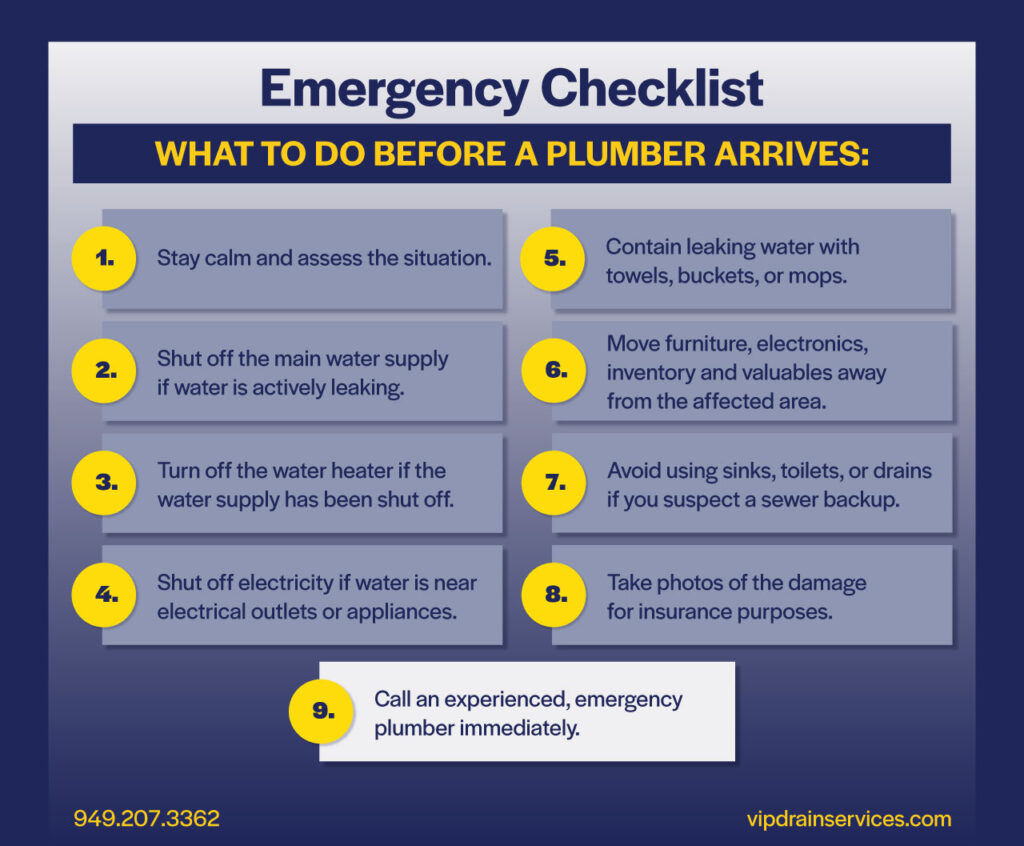
Step-by-Step: What To Do Before the Plumber Arrives
1. Stay Calm and assess the situation
The first step is to determine exactly what’s happening.
Is clean water leaking?
Is wastewater backing up?
Is the leak getting worse?
Is flooding occurring?
Is anyone in danger?
Knowing the source helps you explain the problem clearly when you call the plumber.
2. Shut Off the Main Water Supply
If water is actively leaking, then one of the most important things you can do before a plumber arrives is stopping the flow of water.
If the leak is coming from a sink, toilet, or appliance, close the local shut-off valve. If you cannot locate the source or the leak is severe, shut off your home’s main water valve immediately.
Many Orange County homeowners don’t realize where their main shut-off valve is until it’s too late. Knowing its location before an emergency occurs can save thousands of dollars in water damage.
Commercial buildings should also ensure maintenance staff know the locations of all emergency shut-off valves.
3. Turn Off the Water Heater
If you’ve turned off the main water supply, you should also turn off the water heater. Running a water heater without water can damage the heating elements or tank.
For gas water heaters turn the gas control to “Pilot.” For electric water heaters, shut off power at the breaker panel.
4. Shut Off Electricity if Necessary
Never ignore electrical hazards. If water is approaching electrical outlets, extension cords, electrical panels or appliances, turn off power to the affected area if it’s safe to do so.
Never stand in standing water while touching electrical equipment.
5. Contain leaking water
Once the source of the water leak has been contained, minimize damage by removing as much water as possible. Use towels, buckets, plastic containers, or wet vacuums to remove excess water. Standing water can quickly soak into carpets, drywall or furniture and cause permanent damage or encourage mold growth.
6. Move Your Property
While waiting for your plumber, move any furniture, electronics, area rugs, important paperwork, inventory or equipment away from the affected area. This not only protects your valuables but gives the plumber easy access to the affected area.
The faster the plumber can reach the issue, the faster repairs can begin.
7. Stop Using Plumbing Fixtures
One of the biggest mistakes homeowners make is continuing to use sinks or toilets after a sewer backup or major clog. If you notice multiple clogged drains, gurgling toilets, sewage odors or water backing up into tubs, stop using all plumbing fixtures immediately.
Continuing to run water often makes the backup much worse.
8. Document the Damage
Take photos and videos before cleanup begins.
Capture:
- Water damage
- Burst pipes
- Overflowing fixtures
- Damaged flooring
- Wet drywall
- Damaged belongings
Document the exact time and date of the incident, and the steps that were taken to mitigate the damage. This may help with insurance claims later.
10. Call your plumber!
Now that the appropriate steps have been taken, it’s time to call a plumber. However, an emergency plumbing situation is not an ideal to shop for a trustworthy plumber. Having a verified and trusted plumber you chose earlier will give you the piece of mind that when an emergency happens, you’re in good hands. Partnering with a local plumbing professional not only ensures your emergency is addressed promptly, but also saves you money on travel fees and repair costs.
What NOT To Do During a Plumbing Emergency
While it’s important to take certain steps during a plumbing emergency, it’s just as important to avoid making the situation worse.
Never ignore a leaking pipe. Though some leaks may seem minor, they can quickly turn into severe problems that could potentially call hundreds, if not thousands of dollars.
Do not use chemical drain cleaners on severe clogs. If the blockage is complete, the cleaner can sit in the pipe instead of flowing to the obstruction. This not only makes the product ineffective, sitting chemical cleaners can corrode your pipes, drastically furthering the damage.
Do not use water if sewage is backing up. Any additional water you send into the plumbing system has nowhere to go. Instead of draining away, it can force more wastewater back into your home or business, making the situation worse.
Do not attempt major pipe repairs without proper tools and training. Many DIY fixes temporarily hide the problem while allowing water damage to continue behind walls or under flooring. Do not delay and call a licensed plumber.
Emergency Situations That Require Immediate Action
Some plumbing issues simply cannot wait and require immediate attention.
This includes:
Burst Pipes. Burst pipes can release hundreds of gallons of water within hours. Turn off the main water supply immediately.
Sewer Line Backups. Raw sewage contains bacteria and contaminants that can create serious health risks. Avoid contact and keep children, pets, customers, and employees away from affected areas.
Overflowing Toilets. If plunging doesn’t immediately resolve the issue, stop flushing and shut off the toilet’s water supply.
Water Heater Leaks. Large leaks around the water heater can quickly spread throughout nearby rooms. Older tanks may rupture without warning.
Slab Leaks. Signs include warm spots on floors, rising water bills, low water pressure and sounds of running water inside walls. Slab leaks should always be addressed by a professional.
Gas Line Concerns. If you smell natural gas near plumbing equipment, leave the building immediately. Do not operate any electrical switches and contact your gas utility. Then call an emergency plumbing professional if plumbing work is involved.
Special Tips for Businesses & Commercial Properties
Commercial plumbing emergencies can disrupt operations, damage inventory, and create safety hazards for employees and customers.
Business owners should:
- Train employees on emergency shut-off procedures.
- Keep emergency plumbing contact information readily available.
- Know the locations of all water shut-off valves.
- Protect computers, inventory, and sensitive equipment.
- Restrict customer access to affected areas.
- Document any property damage.
- Coordinate with building management if leasing commercial space.
Restaurants, retail stores, medical offices, apartment complexes, schools, warehouses, and office buildings throughout Orange County can minimize downtime by having an emergency response plan in place before a plumbing problem occurs.
How Being Prepared Can Reduce Repair Costs
The faster you respond to a plumbing emergency, the more damage you can often prevent. Quick action can help reduce water damage restoration costs and prevent mold growth. This alone saves you money on flooring, cabinet or drywall replacement. Appropriate action during a plumbing emergency reduces or completely prevents business interruption and potential damage to inventory. Simply knowing what to do before a plumber arrives could save thousands of dollars in repairs and make your insurance claim process much smoother.
Preventive maintenance, annual plumbing inspections, and routine drain cleaning can also help identify problems before they become emergencies.
When to Call an Emergency Plumber in Orange County
Not every plumbing issue requires immediate service, but certain situations should never be ignored. Call an emergency plumber immediately if you experience:
- Major water leaks
- Sewer backups
- Overflowing toilets that won’t stop
- No running water
- Water heater leaks
- Flooding
- Gas line concerns involving plumbing systems
- Multiple drains backing up simultaneously
Knowing what to do before a plumber arrives can make all the difference during a plumbing emergency. Taking a few simple but important steps can reduce damage, lower repair costs, and speed up the restoration process.
Whether you own a home, manage a commercial property, or operate a business in Orange County, having an emergency plumbing plan in place gives you confidence when unexpected problems arise. When every minute counts, our experienced team at VIP Sewer and Drain Services is ready to respond with prompt, dependable service to get your plumbing system back to normal. We proudly provide fast, reliable emergency plumbing services for homeowners and businesses throughout all of Orange County.
First, stay calm and assess the situation. Shut off the water supply if necessary, turn off the water heater, protect your belongings, avoid using affected plumbing fixtures, document any damage, and call a licensed emergency plumber as soon as possible.
Yes. If you have a burst pipe, major leak, or cannot identify the source of the water, shutting off the main water supply is one of the most effective ways to prevent additional water damage.
Minor issues such as tightening a loose connection or plunging a simple toilet clog may be manageable. However, burst pipes, sewer backups, water heater problems, slab leaks, and recurring drain issues should always be handled by a licensed plumbing professional to prevent further damage and ensure repairs meet local codes.
Yes. Plumbing emergencies can create risks including water damage, mold growth, electrical hazards, structural damage, and exposure to harmful bacteria from sewage backups. Acting quickly and contacting a professional can help protect your property and the people inside it.