

An overflowing toilet can go from a plumbing nuisance to a flooded bathroom in minutes. Before you worry about what caused it or reach for any tools do these three things first:
- Stop the water. If the toilet is overflowing right now, your first priority is stopping additional water from entering the bowl.
Lift the toilet tank lid and locate the flapper – it’s a rubber or plastic ring shaped seal that covers the opening at the bottom of the tank. Push the flapper down gently so it seals. This prevents more tank water from entering the bowl.
Next, find the toilet’s shut-off valve. It’s usually located on the wall or floor behind the toilet, connected to the supply line. Turn it clockwise until it stops.
If the shut-off valve is difficult to turn, don’t force it aggressively. Keeping the flapper seated can stop the tank from sending more water into the bowl.
2. Don’t flush again. It may seem obvious, but when a toilet doesn’t drain after flushing, many people instinctively try flushing it again.
Don’t.
A toilet that can’t drain normally has nowhere to send that additional water. If the blockage is downstream of the toilet, another flush simply adds more water to the bowl. That’s how a small plumbing problem can quickly become several gallons of water on the bathroom floor.
3. Find out whether the problem is the toilet or the line. This is the most important distinction to make when a toilet is overflowing.
A toilet can overflow because the toilet itself is blocked, or because the drain or main sewer line downstream is blocked. Those two situations can look similar at first, but the clues around the house are very different.
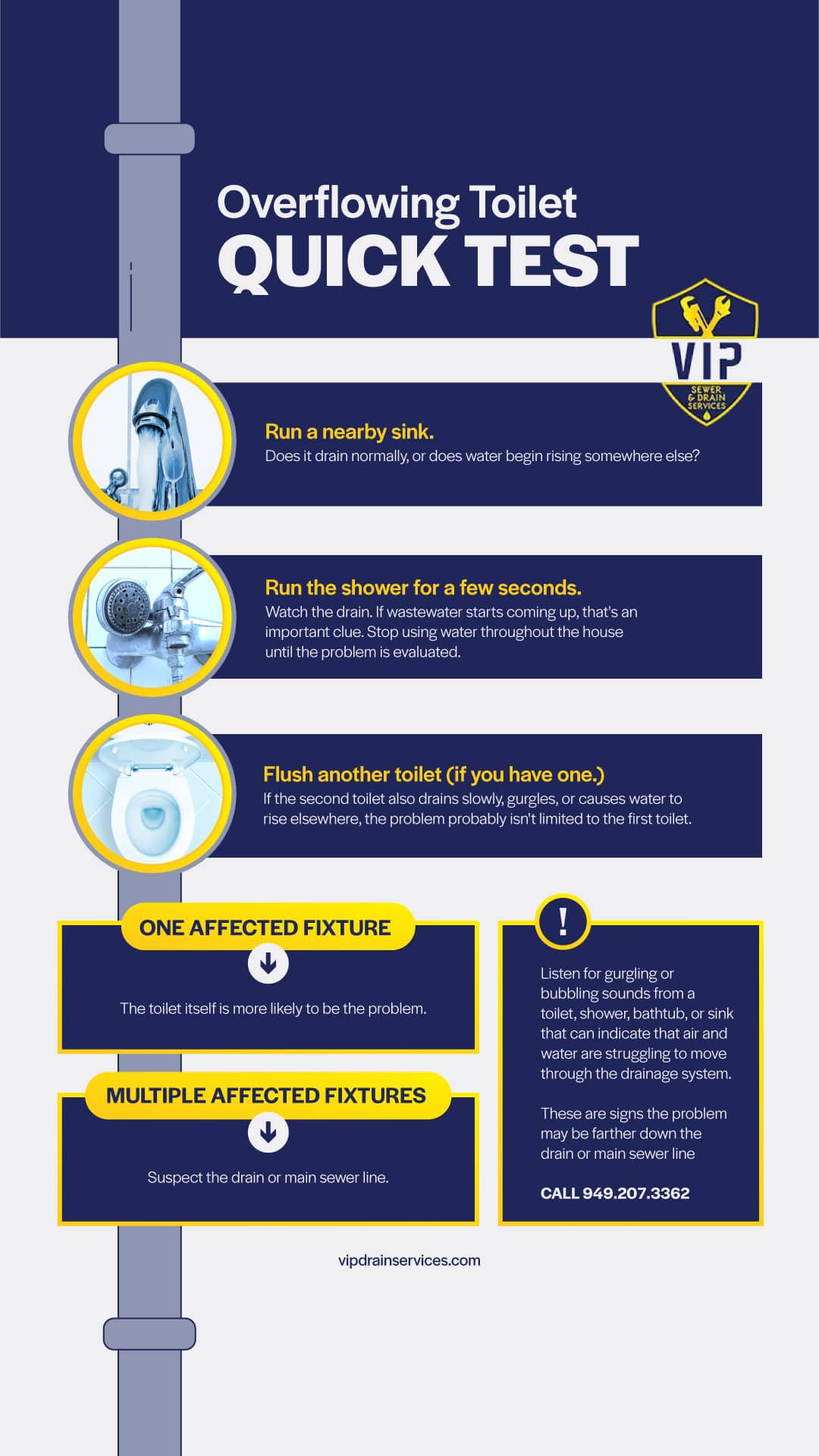
You can perform a quick check without taking anything apart.
Look for these signs:
- Only one toilet is affected. If other toilets and sinks drain normally, this would indicate that the clog is localized to that one fixture.
- Shower or tub back up when you flush. If multiple drains are slow or are backing up, this is a sign that the blockage could be in the main drain or even the sewer line.
- Toilet gurgles when another fixture drains. This could point to a potential drainage problem or a venting problem that blocks air flow.
- Several fixtures are backed up at once. This is a telltale sign that you have a sewer line blockage.
What It Means If Only the Toilet Is Affected
If the toilet is the only fixture having trouble and your other drains are working normally, a localized toilet clog is more likely.
A flange-style toilet plunger is designed specifically for toilets and creates a better seal around the drain opening than a flat-bottomed sink plunger. If you choose to try clearing a localized clog yourself, make sure the plunger creates a good seal and begin with a slow, controlled push rather than immediately forcing it downward.
If that doesn’t work, a toilet auger can reach farther into the toilet trapway. But know when to stop.
If repeated attempts don’t restore normal drainage, if the toilet repeatedly backs up, or if you notice symptoms in other fixtures, continuing to work on the toilet may be treating the wrong problem. Don’t have a plunger? Don’t improvise by repeatedly flushing the toilet or pouring harsh chemicals into the bowl. The goal is to prevent more water from entering the system until you know what’s happening.
What It Means If Other Drains Are Backing Up Too
When several fixtures are affected, the toilet may be more of a messenger than the problem.
Your home’s drain system carries wastewater away from individual fixtures and eventually into the main sewer line. If that line becomes restricted or blocked, wastewater has nowhere to go. Because of the way household plumbing is arranged, the toilet, particularly one located on a lower level, can become one of the first places where that backup becomes visible.
This is why an overflowing toilet accompanied by a bathtub backup and gurgling sounds deserve more attention than an isolated toilet clog. Main sewer line restrictions can have several causes, including tree roots, grease buildup, mineral scale, a damaged or collapsed pipe, or a belly in the sewer line where wastewater and debris collect.
This is where professional drain cleaning, hydro jetting and camera inspection can make a significant difference. A camera inspection can help determine what’s actually happening inside the pipe, while hydro jetting can remove accumulated grease, roots, scale and other buildup from the line.
Why Is My Toilet Overflowing When It Isn’t Clogged?
Sometimes the toilet bowl rises even though there isn’t an obvious blockage in the toilet itself.
There are several possible reasons.
The fill valve or float is malfunctioning. The fill valve controls how much water enters the toilet tank. If the float is incorrectly adjusted or the fill valve isn’t shutting off properly, the tank will just continue to fill. This typically causes water to run continuously and can eventually lead to water entering the overflow tube inside the tank.
The flapper isn’t sealing properly. A worn, damaged, or improperly positioned flapper can allow water to continuously leak from the tank into the bowl. Again, this is a supply-side problem rather than a drain blockage.
The vent stack is blocked. Your plumbing vent system allows air into the drainage system and helps maintain proper pressure as wastewater moves through the pipes. If a vent is obstructed, you may notice poor drainage, gurgling, bubbling, or unusual toilet behavior.
There’s an intermittent main-line restriction. A partial blockage farther downstream can behave inconsistently. The toilet might flush normally several times before suddenly draining slowly or overflowing.
If your toilet keeps overflowing even after it appears to clear, don’t assume the problem has gone away. Recurring symptoms are often a reason to investigate what’s happening farther down the drainage system.
Is Sewage Water Dangerous?
YES. If you see any signs of wastewater in your toilet bowl, avoid touching it with bare hands. Keep children and pets away from the area and avoid tracking the water into other rooms. Ventilate the space if possible without spreading contaminated water to other areas.
Hard, nonporous surfaces that have come into contact with contaminated water should be cleaned and disinfected appropriately after the source of the backup has been addressed.
Porous materials such as rugs, upholstery, drywall or other absorbent materials can be more difficult to clean thoroughly and may need to be discarded or replaced depending on the extent of contamination.
Most importantly, deal with the source of the backup before focusing on cleanup. Otherwise, additional wastewater can continue entering the area.
When an Overflowing Toilet Is a Real Emergency
Not every toilet clog requires an emergency plumber. But some situations should be treated as urgent. Call for professional help promptly if:
- Sewage is spreading across the bathroom floor or into living areas.
- Multiple fixtures are backing up.
- The bathtub or shower fills with wastewater when the toilet is flushed.
- You hear significant gurgling from multiple drains.
- A sewer cleanout is backing up.
- You have only one usable toilet in the home.
- You’re in a multi-unit building and suspect a shared drain or sewer line.
- The toilet repeatedly overflows even after it appears to clear.
When multiple fixtures are affected, avoid running the washing machine, dishwasher, showers, or other high-volume water sources. Additional water can add pressure to a drainage system that is already unable to move wastewater away from the home. For more details, read our guide on what to do before a plumber arrives.
How a Plumber Diagnoses a Recurring Overflow
When an overflowing toilet keeps coming back, the goal shouldn’t simply be to make the toilet drain again. The goal is to find why it keeps happening. A professional drain inspection can help determine whether the restriction is in the toilet, a drain or the main sewer line.
For recurring or suspected main-line problems, a sewer camera inspection can provide a view inside the pipe and identify issues such as roots, cracks, heavy buildup, offsets, collapsed sections, or other damage.
If the problem is buildup or roots, hydro jetting can clean the interior of the pipe more thoroughly than simply punching a small path through the blockage. In other situations, a different repair may be necessary.
The important thing is matching the solution to the actual cause.
An overflowing toilet doesn’t automatically mean you need extensive sewer work. But it also doesn’t automatically mean you need to keep trying to clear the toilet. The surrounding plumbing fixtures can tell you a lot about where the problem is located. At VIP Sewer and Drain Services we can help identify whether you’re dealing with a localized blockage or a larger sewer-line issue and determine the appropriate next step.
Remove the tank lid, push the flapper down to stop water from entering the bowl and turn the shut-off valve clockwise. Do not flush the toilet again until you’ve identified the cause.
A toilet can overflow because of a malfunctioning fill valve, poorly seated flapper, blocked vent, or an intermittent restriction farther down the drain or main sewer line. If the problem keeps returning, professional diagnosis may be necessary.
If the bathtub backs up when you flush, there may be a blockage downstream of the toilet where the fixtures share a drain path. This is a strong reason to suspect a larger drain or main sewer line problem rather than an isolated toilet clog.
It can be, especially if sewage is spreading, multiple fixtures are backing up, or water is appearing in a bathtub or shower. Stop using water and seek professional help when the backup appears to involve the home’s larger drainage system.
If only one toilet is affected, a localized clog may be something you can address yourself. If other fixtures are backing up, the toilet repeatedly overflows, or the problem doesn’t clear, it’s time to have a plumber investigate.
Gurgling can indicate that air is having trouble moving through the drainage system. A blocked vent or partial restriction in a drain or sewer line can cause these symptoms, particularly when other fixtures are also draining slowly.
If multiple fixtures are affected, avoid using other drains until you know where the blockage is. Running a shower, washing machine or other high-volume fixture can add more wastewater to a system that may already be unable to drain.
Each flush adds more water to the bowl. If the blockage prevents that water from draining, repeated flushing can quickly turn an overflowing toilet into a flooded bathroom.
Look for multiple symptoms: more than one backed-up fixture, bathtub or shower backups, gurgling toilets, slow drains throughout the home, or recurring toilet overflows. When several fixtures are affected at once, a main-line restriction becomes much more likely.
No. Chemical drain cleaners are not a good solution for a toilet filled with standing water. They may not reach or resolve the underlying blockage and can leave caustic chemicals in the bowl, creating additional hazards for anyone who later needs to work on the plumbing.